Reading Online Reviews Critically: A Language Lesson Using Vodkabet
Language education is no longer only about grammar, spelling and the history of a script. A growing share of what people read every day is short, informal and persuasive: product ratings, forum posts, comment threads and review summaries. Many of these texts are written in a language that isn't the reader's first, and they often mix two or three languages in one sentence. Knowing how to read them closely, how to tell a claim from evidence and an opinion from a fact, is now a practical literacy skill. It belongs in a language classroom as much as dictionary work or the study of old inscriptions.
This article looks at the genre of the online user review as a whole. It uses one real example: a Russian-language page that summarises user opinions about the betting and casino platform Vodkabet. We aren't recommending the service. We're using it as a text to analyse, because review pages about online gambling are among the most persuasive and most heavily repeated texts on the web.

Why reviews are a language problem, not only a consumer problem
A review is a small argument. It has a speaker, a claim, some kind of support and an intended effect on the reader. Readers who learned to analyse formal prose at school often drop those habits when the text is short, casual or in a foreign language. A sentence such as "withdrawal was fast" sounds like a fact. Linguistically it's a subjective evaluation: "fast" compared with what, measured how, and on which occasion?
Three features make reviews especially hard to read well:
- Compression. Reviews leave out context. The reader has to rebuild who wrote the text and why.
- Code-mixing. Brand names, slang and borrowed terms such as "cashback", "free spins" or "wager" appear in Latin script inside Cyrillic or Myanmar sentences, and they often carry meanings that aren't in standard dictionaries.
- Aggregation. A summary page speaks about "users" in general, and readers can easily mistake the summariser's voice for the users' own.
The example: a review summary for Vodkabet
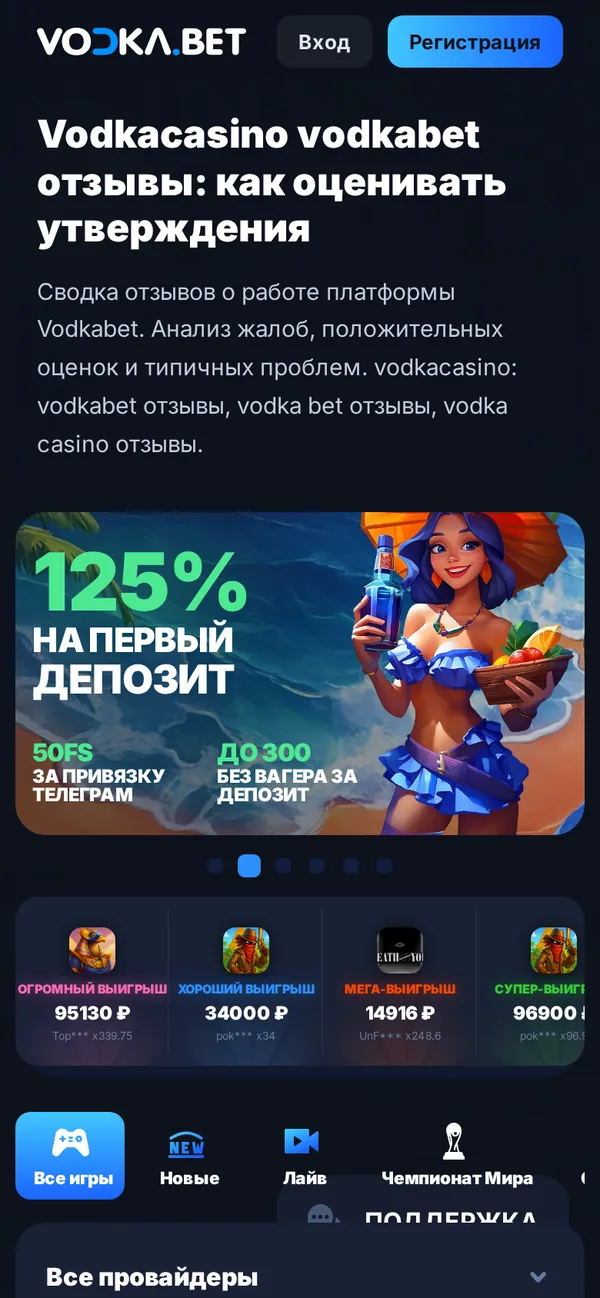
The page we're examining calls itself a summary of opinions about the Vodkabet platform. It says it analyses complaints, positive ratings and typical problems. Its own search keywords show how people look for this kind of content. Variants of the brand name sit side by side: Vodkabet, Vodka bet, Vodka casino. Readers who type vodkabet отзывы ("Vodkabet reviews") into a search engine are using a fixed noun phrase. Russian speakers recognise it at once as a request for opinions rather than official information.
The page heading is worth noticing. It promises to explain "how to evaluate claims", not just to list praise. Framed this way, the text presents itself as a guide to judgement. Whether it actually is one depends on how the reader approaches it, and that's the skill this article is about.
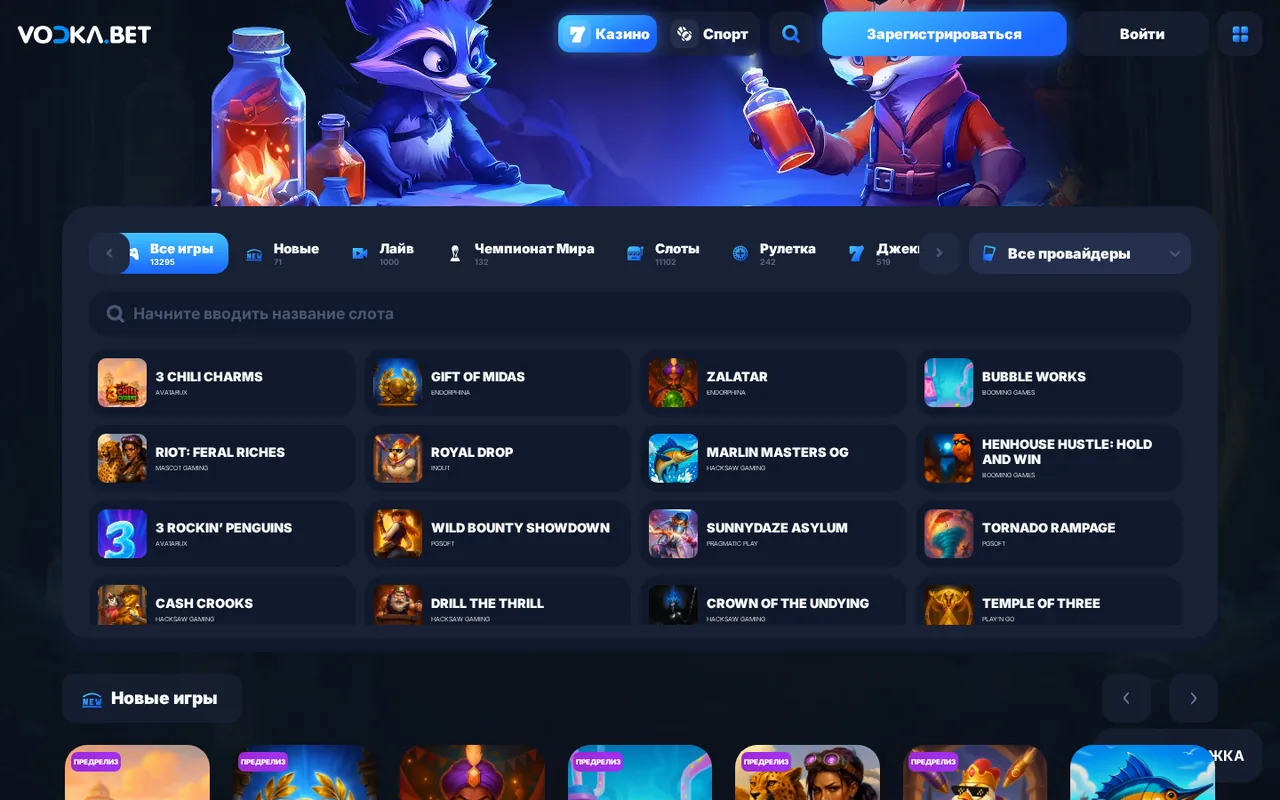
The page sits inside the platform's own interface. Around it are menus for casino and sports sections, registration and login buttons, a support link, a VPN option, an "account transfer" item, and app downloads for Windows and other systems. That layout is itself information. A review summary hosted within a service's own site isn't the same kind of source as an independent forum. A careful reader takes that into account before weighing a single sentence.
Separating claims from evidence
Close to the review content, the surrounding page makes a number of statements. Sorting them into categories is a useful exercise for students of any language:
| Statement on the page (paraphrased) | Type of statement | What a careful reader asks |
|---|---|---|
| 125% bonus on the first deposit | Promotional offer | What conditions apply, and where are they written? |
| 50 free spins for linking a Telegram account | Promotional offer | What does the user give in return, for example personal data? |
| "Instant withdrawal of any amount" to cards, cash or crypto | Absolute claim | Words like "instant" and "any" are strong. What do actual user complaints say? |
| A scrolling list of wins with masked nicknames | Illustrative testimony | Can these be checked? Who chose which ones to show? |
| Catalogue counts (e.g. over 13,000 games, 1,000 live titles) | Quantitative description | Does quantity say anything about quality or fairness? |
None of these statements is necessarily false. The point is that they belong to different speech acts. An offer is a promise with conditions. An absolute claim invites counter-examples. A list of anonymous wins is a rhetorical device: it shows success without showing the larger number of losses. Recognising these categories is a matter of reading comprehension, not of knowing anything about gambling.
Watch the adjectives
The win ticker labels payouts with a graded scale of adjectives: "good", "large", "huge", "mega", "super", "legendary". In linguistic terms this is an intensifier ladder, and it's designed to make every result feel exceptional. Students can compare it with how evaluative adjectives work in Myanmar or English advertising copy. The pattern is almost the same across languages.
Reading complaints and praise side by side
A summary page that promises both complaints and positive ratings gives the reader a chance to practise balanced reading. Anyone looking at отзывы о Vodka казино ("reviews of Vodka casino") or a similar collection can follow a simple method:
- Identify the speaker. Is it a user, the platform or an unnamed summariser?
- Find the concrete detail. Dates, amounts, steps taken and replies received are evidence. "Everything is great" and "total scam" aren't.
- Look for repetition. A problem described independently by many people in different words carries more weight than one dramatic story.
- Notice what is missing. Positive summaries often skip conditions. Negative ones often skip what the writer did themselves.
- Check translation. When a review is translated or partly borrowed, terms like "verification", "wager" or "limit" may shift in meaning.
A review tells you what someone experienced and how they chose to describe it. It doesn't tell you what will happen to you.
Borrowed words and the reader's own language
For a department that works on standard spelling, dictionaries and terminology, pages like this one show how fast new vocabulary spreads. Russian review texts use English-derived terms such as кешбэк (cashback), вагер (wager) and джекпот (jackpot), as well as the abbreviation FS for free spins. Nobody stops to define them. Readers in Myanmar meet the same terms in their own media, sometimes transliterated, sometimes left in Latin script, and rarely explained.
This has practical consequences. A phrase like "no wager" decides whether a bonus can be withdrawn at all, yet a reader who doesn't know the term may skip over it. Clear, standardised equivalents in the reader's own language, together with the habit of looking up unfamiliar terms instead of guessing, protect readers in every area of life, from banking to health to online services.
A classroom exercise
- Collect five short reviews of any online service in two languages.
- Underline every borrowed term and write a plain-language definition for each.
- Mark each sentence as fact, opinion, offer or claim.
- Rewrite the most emotional review in neutral language and discuss what changes.
Limits and responsibility
Online gambling carries real financial risk, and the rules about it differ from country to country. Analysing a review page doesn't make it safe to use the service, and a positive summary isn't proof of anything. The skill this article describes is general. It is the ability to read persuasive text slowly and to ask who is speaking, what is actually being claimed, and what evidence stands behind it. That skill applies to a political leaflet, a medicine label or a loan advertisement just as much as to a casino page.
Conclusion
Review summaries such as the Vodkabet page are a modern genre, but reading them well relies on old abilities: attention to words, awareness of the speaker and respect for evidence. Language education has always aimed to give people command of their own language and confidence with others. Applied to short, mixed-language, persuasive texts, those same aims help readers make clearer and safer decisions online.